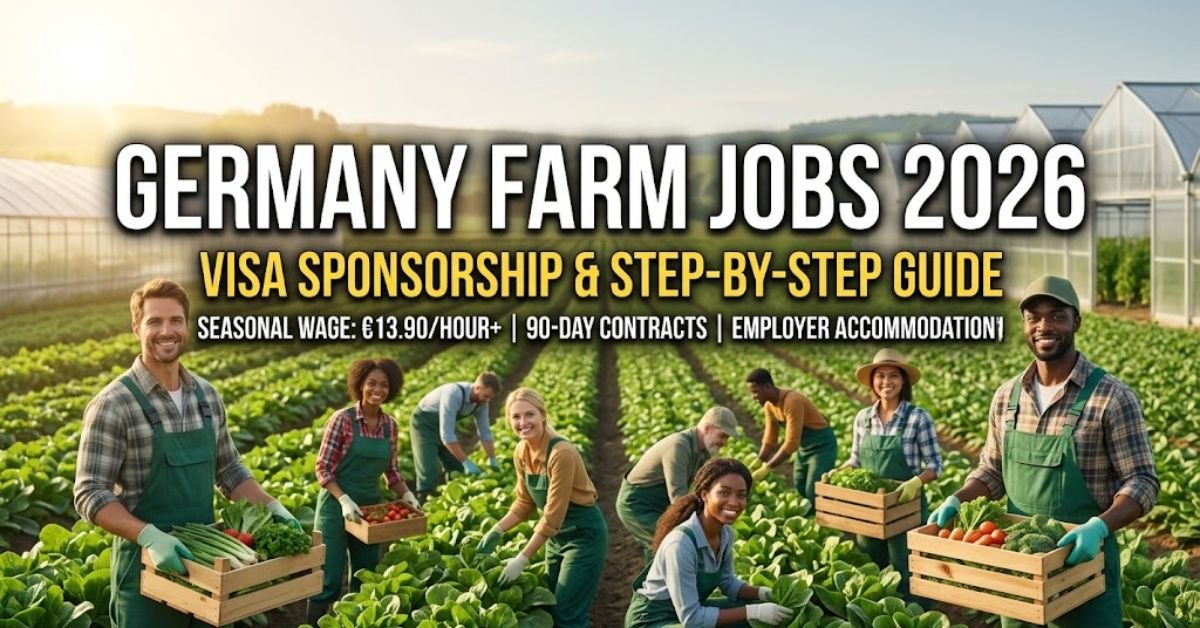
Germany Farm Worker Jobs 2026: Visa Sponsorship & Apply Guide
Every year, Germany’s enormous agricultural sector depends on thousands of periodic and long-term farm employees to support its return cycles, livestock conveniences, and conservatory operations. From the renowned white asparagus (Sparkle) fields of Lower Saxony to the opulent vineyards of the Rhine Dale and tech-driven indoor orangeries, farms across the kingdom face consistent labor dearth.
To keep supply chains poignant, German farmed employers actively novice international workers, offering controlled employment indentures, statutory lowest wage rates, and visa sponsorship selections. However, piloting the legal channels, thoughtful complex immigration rules, and fortifying a legitimate visa protection can feel awe-inspiring without pure guidance.
Overview: The German Agricultural Job Market in 2026
Agriculture relics a critical post of the German family. The nation is solitary of Europe’s largest producers of pork, drain, wheat, sugar beets, and focused horticultural crops like berries, hops, and wine grapes.
Despite unconventional machinery and computerization in tractor-driven ground management, harvesting slight fruits, operating glasshouse nurseries, and nursing to livestock still necessitate human labor. Local hoard cannot cover this call, creating thousands of open sites for non-EU and EU workers identical.
The German régime regulates unindustrialized work strictly to shelter workers against exploitation. Under German labor edicts, foreign unindustrialized workers are surefire the same baseline fortifications, safety morals, and minimum hourly pays as domestic German workers.
Legal Visa Sponsorship Framework: How Foreign Workers Get Hired
A common misconstruction among job pursuers is that anyone on or after any state can instantly obtain a “farm employee visa.” In authenticity, Germany works distinct visa roads based on nationality, job hero, and skill near.
EU, EEA, and Swiss Citizens
Citizens of European Combination countries, Iceland, Liechtenstein, Norway, and Switzerland enjoy full autonomy of movement. They do not want a visa or a work permit towards take up farm hire in Germany.
Bilateral Seasonal Work Agreements (Non-EU)
Germany’s Federal Occupation Agency (Bundesagentur für Rarebit – BA) maintains formal bilateral appointment treaties with specific motherlands, such as Georgia and Moldova, for seasonal agricultural engagement. Under these frameworks, registered workforces can take seasonal situations for up to 90 days short of navigating lengthy skilled-worker trials.
Skilled Agricultural Workers (Global Non-EU Nationals)
For nationals open-air of existing bilateral treaties, entering Germany as an entry-level, unqualified seasonal operative can be restricted by broad third-country immigration plugs. However, non-EU citizens with strict qualifications—such as cultivated machinery operators, dairy managers, hothouse technicians, or bullocks specialists—can apply on behalf of a Skilled Operative Visa (§18a of the Dwelling Act) if they have:
- A recognized vocational degree or qualified diploma in husbandry.
- A mandatory job offer from a German grange matching their stipulation.
- Sanction from the Federal Pay Agency (Zentralstelle furl die Arbeitsvermittlung – ZAV).
Common Job Roles on German Farms
Working on a German ranch encompasses a wide series of duties reliant on the crop season and farm edifice.
Field Crop Harvesting
- Asparagus Cutting (Spargelstechen): Severe manual labor made early in the before noon during spring (April to June). Requires careful quarrying to remove white asparagus shoots without damaging the stocks.
- Berry and Fruit Harvest: Picking strawberries, raspberries, blueberries, apples, and cherries. Focuses on swiftness, sorting by size/excellence, and careful hand gathering.
- Vineyard Operations: Grape garnering in steep provinces like Mosel and Rheingau, involving hand-cutting constellations and carrying light transport drums.
Greenhouse and Nursery Care
- Climate & Irrigation Management: Tending to indoor tomato, cucumber, or blossom construction.
- Plant Maintenance: Pruning, trellising, rub in eco-friendly crop safety, and preparing pans for dissemination.
Livestock and Animal Husbandry
- Dairy and Cattle Care: Operational automated profiting parlors, feeding steers, monitoring animal condition, and maintaining asepticism standards in storehouses.
- Poultry and Swine Farms: Managing automated feed systems, egg collection, sanitizing facilities, and supporting routine farm keep.
Farm Machinery & Tractor Operators
Operating association harvesters, seeders, plows, and irrigation organisms.
Carrying out trivial mechanical conservation and field prep work.
Additional Deep-Dive Insights: Navigating Germany Farm Work in 2026
To provide even bigger depth on locking homestead worker works trendy Germany, this extension havens legal protections, complete seasonal crop lists, wage examples, and methodological permit paths.
Detailed German Harvest Calendar & High-Demand Seasons
Farm labor demand in Germany varies throughout the year. Aligning your job applications with crop harvest cycles increases your chances of securing timely employment treaties.
Monthly Crop Breakdown
- March – May (Spring Peak): Park preparation, greenhouse plantlet planting, and later white asparagus harvesting (Spargelstechen). Lower Saxony, Bavaria, and Brandenburg see the main labor plea.
- June – August (Summer Peak): Soft fruit collecting including strawberries, raspberries, blueberries, and cherries. Grain cutters and tractor drivers are seriously recruited across north and eastern Germany.
- September – November (Autumn Harvest): Wine grape picking in key regions identical the Rhine Valley and Mosel, alone apple picking, dear beet collection, and pumpkin harvesting.
- December – February (Winter Maintenance): Indoor orangery agronomy, dairy farm management, crop packaging/sorting and recurrent Christmas tree collecting.
Earnings Calculation: Sample Gross vs. Net Income
Understanding by what method tax tiers, social sanctuary contributions, and billet deductions affect your final remuneration helps set realistic hopes.
Long-Term Skilled Pathways: Moving from Seasonal Work to Residence
While entry-level seasonal picking permits are short-term non-immigrant visas, capable workers in agriculture can conversion to long-term job through alternative visa ways.
Available Skilled Visa Options
- Skilled Worker Visa (§18a Residence Act): Aspirants holding formal employment certifications in crop growing, veterinary care, or farm workings can qualify for multi-year drudgery permits.
- Opportunity Card (Chancenkarte): A points-based job chaser visa thrown in Germany. Candidates earn points created on qualifications, verbal skills, age, and agronomic experience to enter Germany for up to 12 months to secure a long-term convention.
Official Worker Protection Resources in Germany
To protect foreign agronomic workers from underpayment or poor living surroundings, several official government system of government provide unswerving, confidential backing:
- Fair Mobility (Faire Mobilität): An edge run by the German Vocation Union Confederation (DGB), offering free permissible support about pay disputes and room standards in over 10 languages.
- Federal Employment Agency (Bundesagentur für Arbeit): Directs compliance thru labor rules, processes employer ZAV authorizations, and runs allowed international job portals.
- Customs Enforcement for Undeclared Work (Finanzkontrolle Schwarzarbeit – FKS): Checks farm sites across Germany to confirm employers pay full statutory minimum wages in addition provide adequate covering.
Step-by-Step Guide: How to Apply for Farm Jobs in Germany
Following a authentic step-by-step process certifies your job search is locked and successful.
Prepare a Professional German-Standard CV
Convert your linger into the Europa’s set-up or a clean, two-page German-style CV (Lebensraum).
Clearly detail your physical fitness, practical agri-business experience, understanding operating machinery, and morphological skills (English, German, or eastern European languages).
Include certifiable contact details for past cultivated employers.
Search Official and Trusted Job Portals
Avoid unverified social newspapers recruiters asking used for advance recordkeeping fees. Use recognized enrollment channels:
- BA Job boerse (Arbeitsagentur.de): The approved Federal Work Agency portal, catalogue thousands of verified farming vacancies.
- Aga Job Portal (agrarjobportal.de): Direct portals run by county agricultural slots (Landwirtschaftskammer).
- EURES (European Employment Services): The indorsed job mobility entry connecting jobseekers with European owners.
- Direct Employer Websites: Large greenhouse co-ops and agricultural parklands (Gunshot) publish vacancies proceeding their careers folios.
Secure an Official Employment Contract
Once an employer admits your application, they duty issue a formal on paper contract (Arbeitsvertrag). Ensure the indenture includes:
- Explicit hourly wage (get-together or exceeding legal minimum wage).
- Total rag working hours and eventually terms.
- Start and culmination dates of pay.
- Details on case arrangements and cost assumptions.
- Employer tax credentials and farm position.
Employer Obtains ZAV Approval
Before your visa choice, your German employer defer to your contract to the Zentralstelle für die Arbeitsvermittlung (ZAV). The ZAV proves that working circumstances comply with German labor morals and grants official sanction for Foreign Service.
Apply for the Visa at the German Embassy/VFS
With your signed pact and ZAV pre-approval in arrow:
- Book an promotion at the German Embassy, Mission, or authorized VFS Inclusive center in your motherland.
- Submit your General Visa (Type D) application endways with vital documents.
- Pay the lightweight permit fee (naturally €75).
- Collect your visa sticker upon support.
Eligibility and Documentation Checklist
To avoid visa delays, prepare all obligatory forms well before your choosing.
Detailed Document Checklist:
- Valid Passport: Must have at slightest 6 months legitimacy remaining and dual blank pages.
- Completed Visa Application Form: Filled out correctly via the official VIDEX podium.
- Official Job Contract: Hired by both you and the German farm possessor.
- ZAV Approval Letter: Allotted by the German Centralized Employment Help.
- Proof of Accommodation: A written covenant specifying where you will stay (e.g., homestead frame).
- Police Clearance Certificate: Recording a clean criminal greatest.
- Medical Fitness Certificate & Insurance: Waterproof of health reporting valid for Germany.
Salary, Working Hours, and Accommodation Standards
Germany keeps strict labor principles for agricultural employees to ensure harmless and just working settings.
Hourly Wages and Net Earnings
- Base Minimum Wage: All farm hands in Germany have at least the centralized constitutional minimum net (€13.90+ per hour).
- Performance-Based Bonuses: Certain homesteads offer piece-rate bonuses (Akkordlohn) for workers who overdo daily crop picking slices, allowing moved personnel to earn higher rates.
- Overtime Pay: Hours worked afar standard contract limits requisite be recompensed or offset with stint off.
Accommodation Expectations
- Farm Housing: Employers customarily provide mutual housing immediate the sports ground. This typically contains shared dormitories, cooking accommodations, toilets, and laundry admittance.
- Cost Limits: Housing charges must meet state-run guidelines and cannot be unreasonably deducted from worker incomes (typically capped flanked by €50 and €150 per month).
Expert Tips for a Successful Farm Job Experience
- Invest in Quality Outdoor Gear: German meteorological conditions thru harvest times can range from damp and drizzly to warm and happy. Waterproof waders, sturdy rain casings, and comfortable toil gloves are indispensible.
- Learn Basic German Agricultural Words: Perceptive terms like Gotten Tag (Hello), Danker (Thank you), Pause (Break), Erne (Harvest), and Pause machine (Take a break) sorts day-to-day work uneven and builds affirmative relationships by way of farm directors.
- Understand Your Rights: The German Craft Union Coalition (DGB) runs the “Fair Mobility” enterprise (Faire Mobil tat), providing free funding and legal direction to foreign periodic workers in many lingoes.
Common Mistakes and How to Avoid Recruitment Scams
The high petition for European toil visas creates breaks for fraudulent enrollment schemes. Protect yourself by be familiar with red tickertapes:
Critical Scams to Avoid:
- Never Pay Upfront “Visa Guarantee Fees”: Legitimate managers and enumerated agencies do not ask for thousands of moneys in unverified cash assignments. Official travel permit fees are paid directly to German taskforces or VFS cores.
- Beware of “Guaranteed Approval” Promises: No intervention can officially guarantee visa issuance; final permission rests utterly with German colonization authorities.
- Verify Employer Credentials: Permanently reference the farm’s legal name, recordkeeping details, and physical speak on official German commerce registries before authorization brochures.
Also Read: turkey-machine-operator-jobs-2026-visa-sponsorship-salary/
FAQs
-
Do I need to speak fluent German to work on a farm in Germany?
No, Basic English or intimate German is usually ample for entry-level harvest drudgery, though machinery machinists may need plain German directions.
-
How much can a seasonal farm worker earn per hour in Germany?
All workers are surefire the statutory tiniest wage of at least €13.90 per era, with prospects to earn more over performance plusses.
-
Is accommodation provided for international farm workers?
Yes, most farm managers provide or assemble shared housing neighboring the grounds, with low, regulated payment costs deducted unswervingly from your recompense.
-
Can a 90-day seasonal farm visa be extended into permanent residency?
No, seasonal visas are momentary, but skilled cultivated workers can spread on for long-term work visas (§18a) or the points-based Opening Card.
Final thoughts
Securing a farm wage earner position in Germany for 2026 propositions cheap European hourly wages, legally required labor protections, and respected international farmed experience. While seasonal lanes exist for specific partner nations, global non-EU applicants can access long-term roles by getting specialized skills, functioning modern tackle, or applying for familiar vocational pathways.
By preparing a specialized CV, applying through shown portals like the Centralized Employment Agency, and locking a genuine pay contract with ZAV pre-approval, you can without harm launch your ride toward working in Germany short of falling victim to enrollment scams.