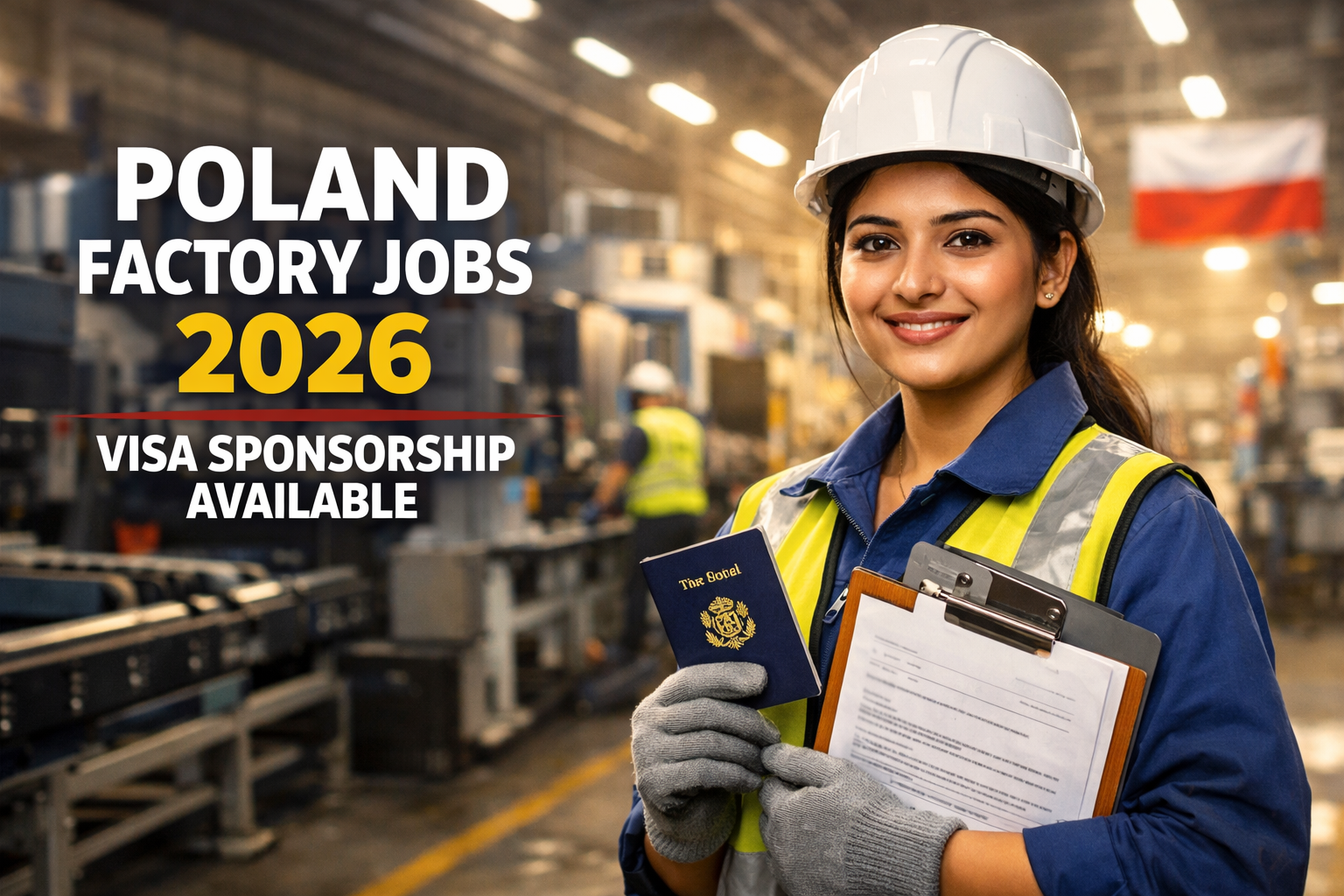
Factory Worker Jobs in Poland 2026 – Visa Sponsorship | Easy Apply Guide
Poland stands out as a top destination for jobs across Europe – factory roles fill fast. Come 2026, gaps in production teams will push hiring higher, pulling more outsiders in. Firms there aren’t just looking locally; they’re reaching beyond borders, bringing people in with full legal support. Crossing into European work life gets simpler when paperwork follows you, backed by employers ready to sponsor stays.
Working in factories across Poland suits people wanting steady pay, help with visas, plus a chance to work abroad even if they lack advanced training. Tasks often involve putting items into boxes, joining parts on moving lines, running equipment, managing storage spaces, or assisting during manufacturing steps.
Factory Jobs in Poland Types
Folks stepping into factory roles across Poland will find openings spread through many kinds of production fields – each calling for its own mix of stamina and ability. Some tasks move slowly, others need quick hands; none always demand a long work history. Many positions welcome newcomers without prior training on site.
Packaging Jobs
Out there on the floor, packaging work pops up a lot in Polish factories. Putting things into boxes, sticking labels on them – this kind of task keeps people busy. Getting started is no big hurdle since the steps aren’t complicated. Shipment prep wraps up the routine for many new workers.
Assembly Line Jobs
Putting things together is what people do on an assembly line. Day after day, small pieces become part of something larger through steady hands. Focus matters more than past work when starting out here. Each task builds rhythm without needing special training first. Mistakes stand out quickly in this kind of routine. Doing the same thing right every time keeps everything moving forward.
Machine Operator Jobs
Working with factory equipment usually means running machines during manufacturing. Training often comes straight from the company after hiring begins. Pay tends to be a bit more than entry-level positions nearby.
Farm Equipment Operators
Sorting items comes first in these roles, followed by moving them into place across warehouse spaces. Loading shipments happens after organization checks finish each morning. Inventory work shows up on some days instead of transport duties. Tasks shift based on what the factory floor needs most at any moment.
Food Processing Jobs
Fresh off the line, Poland runs a massive food sector where plants bring on staff to handle everything from sorting crops to sealing packages. Workers show up daily, stepping into jobs that keep tabs on freshness while getting meals ready for shelves. From one end to another, facilities rely on teams to move goods through stages without missing a beat.
Working abroad might suit you if you stay active and adapt easily to shifting schedules – several roles open doors for outsiders ready to push their limits. These positions often welcome people from other countries, provided they handle physical tasks without hesitation.
Salary and Benefits in 2026
Hourly pay for factory staff across Poland stands near €4 up to €7 by 2026, shifting with role and skill level. Workers there pull in wages that match well against much of Europe.
Most months bring in anywhere from 900 to 1,500 euros, though extra hours can push that up. Workers with more experience might land positions paying beyond that range.
Additional Benefits:
- Free or subsidized accommodation
- Transportation provided by employer
- Overtime bonuses
- Health insurance
- Legal work contract
- Visa sponsorship support
These benefits make Poland an attractive destination for foreign workers who want to save money while working abroad.
Poland Work Visa with Sponsorship
To work legally in Poland, foreign workers must obtain a work visa. Most factory jobs come with visa sponsorship, meaning the employer helps you through the process.
Types of Work Permits:
- Type A Work Permit (most common for foreigners)
- Seasonal Work Permit (for short-term jobs)
Basic Requirements:
- Valid passport
- Job offer from a Polish employer
- Work permit approval
- Visa application form
- Proof of accommodation
The visa process is usually straightforward if you have a valid job offer.
Eligibility Criteria
To apply for factory jobs in Poland in 2026, you must meet the following requirements:
- Minimum age: 18 years
- Physically fit for factory work
- Basic English communication (Polish is a plus)
- No criminal record
- Willing to work shifts
Experience is not mandatory for most roles, making these jobs accessible for beginners.
Step-by-Step Application Process
Applying for factory jobs in Poland requires a structured approach. Many applicants fail because they apply randomly without strategy.
Step 1: Search for Verified Jobs
Use trusted platforms such as:
- Indeed Poland
- Pracuj.pl
- EURES Portal
Step 2: Prepare a Professional CV
Your CV should focus on:
- Physical work experience
- Reliability
- Availability
Step 3: Apply Online
Submit applications to multiple employers daily. The more you apply, the higher your chances.
Step 4: Receive Job Offer
If selected, the employer will send a job contract and begin the sponsorship process.
Step 5: Apply for Visa
Submit your documents to the Polish embassy.
Step 6: Travel and Start Work
After visa approval, you can travel to Poland and begin your job.
Common Mistakes to Avoid
Many applicants fail due to these mistakes:
- Applying to fake job websites
- Sending incomplete CVs
- Ignoring visa process
- Applying too late
- Not verifying employer
Skipping these errors might just boost how often you get it right.
Poland Seeks Workers From Abroad
Faster growth in Poland’s economy pushes companies to look beyond borders for staff. Because few locals take factory jobs, employers turn to outsiders more often now. Workers from abroad fill gaps where homegrown labor falls short.
In 2026, demand will increase due to:
- Industrial expansion
- Labor shortages
- Export growth
- Aging population
Foreign workers often find their way into Europe through Poland – it tends to be straightforward.
Living Spaces and Housing in Poland
- Living gets simpler when you land a factory job in Poland – housing often comes sorted by the employer. Foreigners find footing fast since rent stress fades away early on. Usually, there is no charge for rooms or just a small fee taken out each month. That setup frees up much of what they earn after payday. Savings grow quietly but steadily under such conditions.
- Where you stay often ties to who hires you and where the work is. A firm might set up roommates, two to four people sharing an apartment. Others arrange dorm-like spaces close to production sites. Beds come standard, also cooking areas, toilets, warmth when needed, internet now and then.
- Out near open roads, factories sometimes set up living spaces just a short walk away. Because of this setup, workers spend less time getting to their jobs. Getting around costs drop when homes sit nearer to workstations. Some firms run buses each day from where people sleep to where they operate machines.
- Meals often come at an extra cost, yet staff members can use shared kitchens to prepare food themselves. Affordability stands out here, especially when measured against Western Europe, giving employees a chance to set aside income.
- For the most part, housing and daily life meet basic needs while people work abroad. A roof is provided, along with essentials that make staying there manageable through the job term.
Workplace Settings and Employment Context
Folks on factory floors in Poland often move heavy things, yet spaces stay tidy and risk low. Rules set by Europe guide bosses here, so people get steady conditions plus protection while they earn.
Most people spend about eight to ten hours on the job each day, adding up to forty hours weekly. When things get hectic at work, extra shifts might pop up – these often come with better pay.
Midnight hours often light up factory floors just like morning ones. Shift patterns shape how workers plan their days, sometimes flipping routines upside down.
The job tasks may include:
- Operating machinery
- Packing and labeling products
- Quality checking
- Loading and unloading materials
- Maintaining production lines
Out on the job site, gloves, helmets, and uniforms show up – ready for each worker. Before anyone begins, someone walks them through what they need to know.
Even so, some folks stick with factory jobs because pay comes regular plus they’re on the books. Heavy lifting aside, there’s comfort in knowing what each week brings.
Documents Needed for Factory Work in Poland
A solid pile of paperwork must sit ready before chasing factory roles in Poland that include visa help. One blank form, one typo, maybe a smudged signature – suddenly weeks vanish waiting for answers. Wrong details? The door shuts fast.
Essential Documents:
A passport that counts as valid works here – must stay good for at least half a year past travel date
- Updated CV Simple Job Focused
- Job offer letter from employer
- Polish Authorities Issue Work Permit
- Visa application form
- Passport-size photographs
- Proof of accommodation
- Medical certificate (if required)
- Police clearance certificate
Documents must line up exactly with what you wrote on your form. A single difference might slow things down when they check your visa.
Top Sites for Factory Work Listings in Poland
Real work chances matter more than anything else. Since plenty of shady brokers and online spots pop up, sticking to known sites makes sense.
Trusted Job Platforms:
- Indeed Poland
- Pracuj pl Official Polish Job Portal
- Eures European Job Mobility Portal
- LinkedIn Jobs
Applying straight to a firm’s site works too – some prefer that route instead of third-party platforms. Before sending anything, look into what past employees say and whether the role actually exists.
Read More: https://jobs.apktal.com/warehouse-worker-jobs-in-france-2026/
FAQs
-
Can foreigners work in Poland factories in 2026?
Finding work in Polish factories is possible for people from other countries, thanks to support with visas. Workers moving there can count on help getting the right paperwork through their job offers.
-
Factory worker pay in Poland – how much do they really make?
A worker at a factory might take home between €900 and €1,500 each month, though it really hinges on what they do day to day along with extra hours. Some people see more cash after clocking late shifts now and then.
-
Does your job come with a place to stay?
Some companies cover housing completely. Others charge just a small amount for a place to stay.
-
How long does the Poland work visa take?
A wait of four to eight weeks often follows once the job offer gets approved. Sometimes it moves faster, though most people count on about a month or more before the visa clears.
Final Thoughts
Jobs on production lines in Poland during 2026 open clear paths abroad for people from other countries, backed by official visa help. Basic entry rules, steady pay, along with growing needs in manufacturing, make these roles fit well for newcomers or anyone wanting overseas work exposure.
Starting off right means using honest channels, sorting out paperwork early, then waiting with better odds. Poland opens doors across Europe, especially when you land work in a plant – steady steps begin there.