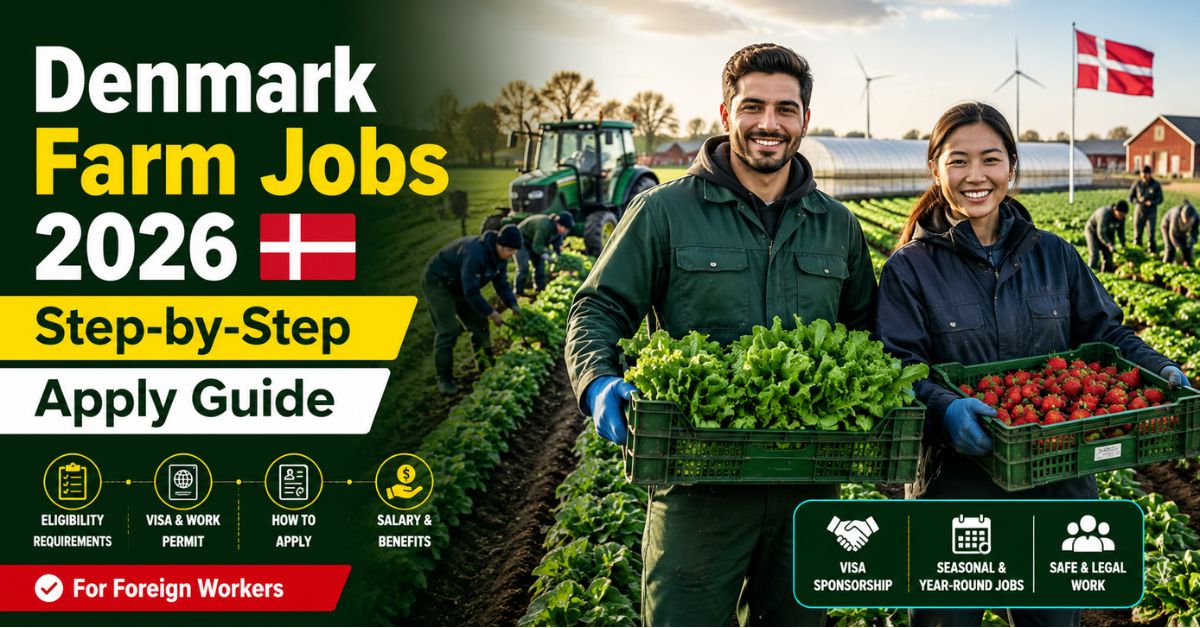
Denmark Farm Jobs for Foreign Workers 2026 – Step-by-Step Application Guide
Denmark is one of the most attractive locations in Europe for agricultural employment. The country’s modern and sustainable farming methods, superior quality of production and strong labour protections provide many possibilities to foreign workers looking for farm jobs. Danish agriculture is diverse, technologically high performing, and always facing a shortage of skilled and semi-skilled workers, from dairy farms to vegetable production, organic farming and livestock farming.
But applying for farm employment in Denmark can be a daunting process for international applicants. Issuing visas, employer expectations, and legal paperwork are frequently encountered hurdles. This guide is intended to offer an extensive and stage by step procedure for Danish farm applications for foreign workers.
Overview of Denmark’s Agricultural Sector
Denmark is renowned for its effective and bearable farming performs. The agronomic segment donates meaningly to the republic’s economy, with products ranging from dairy, meat, and poultry to grains, tubers, and fruits. Recent Danish farms use forward-thinking expertise for irrigation, crop checking, and livestock running, offering foreign workers exposure to hurtful-edge farming methods.
Foreign labor is vital to Denmark’s farming industry, specially during planting and gathering seasons. Places available include:
- Dairy Farm Workers: Management milking, nourishing, and frighten care.
- Cows Workers: Thoughtful for pigs, poultry, and other animals.
- Crop Hands: Planting, tending, and harvesting vegetables and fruits.
- Farm Machinery Operators: Managing tractors, harvesters, and other equipment.
- Overall Farm Assistants: Support in daily farm acts, maintenance, and cleaning.
The sector is structured to accommodate both seasonal and long-term employment, providing opportunities for a wide range of skill levels and experiences.
Key Highlights of Farm Jobs for Foreign Workers
- Visa Support: Many farms offer visa support for foreign workers.
- Good Pay and Benefits: Wages include housing, dinnertimes, and sometimes transportation.
- Legal Guards: Danish labor laws agreement fair treatment, safe working conditions, and timely imbursement.
- Skill Development: Labors gain needles-on experience with up-to-date farm tackle and sustainable practices.
- Cultural Experience: Living and salaried in Denmark allows immersion in Danish culture and language.
Eligibility and Requirements
Before applying, foreign workers must meet certain criteria:
General Requirements
- Age: Usually ranges from 21 to 50 years.
- Vaccination requirements: Must meet with medical examinations and vaccination requirement.
- Experience: Prior farm or agricultural experience is highly beneficial.
- Skills: Farmwork knowledge, animal handling or machinery handling preferred.
Required Documentation
- Valid Passport with six months’ remaining.
- Recent passport-sized photographs.
- Experience and education (if applicable).
- Police clearance certificate.
- Medical examination report.
- Attended the Danish farm’s induction program.
Ensuring that these forms are completed correctly can help to avoid visa processing delays and ensure that your visa is processed smoothly.
Step-by-Step Guide to Applying for Farm Jobs
Step 1 is to identify job opportunities
Look on trusted Danish agricultural websites, ports and farm websites and licensed recruitment agencies.
Avoid legal issues by concentrating on farms which sponsor visas.
Step 2: Prepare Your Application
- Update resume to emphasize farm experience and skills.
- Include copies of all required documents (scanned).
- Attach a cover letter detailing your willingness to work on a farm in Denmark.
Step 3: Submit Applications
- Submit applications directly via the farm websites or through recognised recruitment agents.
- Confirm submission instructions to be sure that submissions are done correctly.
Step 4: Receive Job Offer
Once it is chosen, a job offer is issued by the farm specifying the conditions of employment, its duration and the benefits that are to be bestowed.
Step 5: Visa Sponsorship
Your work visa is applied for by the employer via Denmark’s Agency for International Recruitment and Integration (SIRI).
Step 6: Medical Examination
Take necessary health check-ups at designated clinics in your home country.
Step 7: Visa Issuance
- If the visa is granted, your visa will be stamped on your passport.
- You are now ready to arrive and orient.
- Workers can go to orientation and safety training at the farm when they arrive in Denmark.
Immigration and Employment Applications
Foreign farm workers need to be granted a work visa to Denmark to be able to work there. The process involves:
- Employer Initiates Sponsorship: A request is made by the farm to SIRI.
- Document Verification: SIRI checks personal & professional paperwork.
- Visa Authorization Letter: If approved, a visa authorization letter will be issued.
- Apply for an application:passport and authorization letter at the embassy in Denmark. .Medical Screening: Make sure that the health is compliant.
- Visa Stamping: If your application is granted, you can legally enter Denmark.
- Residence and Work Registration: Register with local authorities to get a work permit.
Each step is legally and smoothly followed up.
Denmark Farm Job Market Trends 2026
Denmark’s agriculture industry is flourishing, with a strong demand for premium dairy products, organic crops, and eco-friendly farming methods. There are times when there is an increased demand for foreign workers, like the harvest season. Key trends include:
- Sustainable Agriculture: Sustainable farming methods are being employed on many farms, such as using renewable energy for barns and minimising the use of pesticides.
- Technological Adoption: Climate-controlled barns, automated feeding systems and automated milking machines involve working with sophisticated technology.
- International Workers on Danish Farms: Farms are increasingly depending on foreign labour for both seasonal and permanent employment.
- Competitive recruitment: Farms compete to recruit a skilled labor by providing better salary, accommodation and benefits.
Readers of the trends blog can take advantage of this insight to position themselves strategically and highlight the skills and experience that is most sought after.
Advanced Skills for Danish Farm Jobs
In addition to farm work, applicants with specialized skills may be more competitive:
- Animal Health Management: Understanding of basic animal health and preventive care.
- Milking Equipment Operation: Skills in operating milking and pasteurization equipment.
- Agricultural Farming Methods: Understanding of organic farming methods, crop rotation, soil management.
- Machinery Operation: Tractor, harvester, and irrigation system operation skills.
- Food Safety & Hygiene: Awareness of livestock & milk production hygiene procedures.
Employers appreciate employees that are able to carry multiple jobs and can adjust to new technology, which is a great opportunity for long-term employment or promotion.
Doing the move – practical tips
There are more things involved in moving to Denmark for farm work than just finding a job. The following are some practical tips:
- Financial Planning: Save up for things such as travel, clothing, and personal expenses before you begin working.
- Language Skills: Basic Danish phrases (greetings, numbers, etc.), facilitate daily work and integration.
- Cultural Awareness: Denmark is egalitarian, punctual and value personal responsibility. A worker’s ability to adjust to local norms is a key factor in building trust.
- Travel arrangements: Check with employer for travel plan, verify work visa and paperwork.
- Packing Essentials: Work Gloves and Boots and weather appropriate clothing and any paperwork, certificates, etc.
Knowing Your Labor contract
Labor Contracts are legally binding documents. Things to keep in mind:
- Salary Details: Hourly pay, overtime rates and payment schedule.
- Working Hours: Daily and weekly schedules, rest periods and holidays.
- Benefits: Accommodation, meals, insurance and transportation allowances.
- Probation Period: Terms of probation and evaluation.
- Termination Rules: How and when employment can be terminated, notice periods and dispute resolution.
Understanding the contract and ensuring compliance with Danish labour laws, through reading and understanding, helps to eliminate misunderstandings.
Benefits of Working on Danish Farms
The Danish Farm Packages derive benefit from working on Danish Farms.
- Accommodation and Meals: Most farms offer free meals and accommodation.
- Health Insurance: Usually comprehensive coverage is available.
- Safe Work Environment: Danish legislation covers the areas of safety and working conditions.
- Competitive Salaries: Salaries are based upon skills and experience.
- Skill Enhancement: Exposure to modern farming techniques and technology.
- Cultural Integration: Learning the language and culture by living in Denmark.
Common Mistakes to Avoid
Here are some common mistakes to avoid:
- Hiring through untrustworthy recruitment agencies.
- Incomplete and incorrect paperwork.
- Failure to consider health criteria when granting visas.
- Accepting jobs without visa sponsorship.
- Lack of knowledge and understanding of labor contracts.
Expert Tips for Applicants
- Consider specialized roles on the farm, such as those found in Target Skilled Roles.
- Employ ability is enhanced by taking short courses for certification in animal care, machinery or crop management.
- Networking: Connect with other foreign farm workers in Denmark online in forums and communities.
- Carry a copy of your Documentation: Always have copies of medical records, passports and contracts.
- Even simple phrases will improve communication on farms – learn Basic Danish.
Seasonal and permanent farm work
Seasonal Jobs
- Duration: 3-6 months, frequently during planting or harvest seasons.
- Visa: Temporary temporary work visa.
- Flexibility: Ideal for temporary international experience.
Permanent Jobs
- Duration: Year-round (may be multi-year).
- Rewards: Visa (full work visa with residence permit).
- Benefits: Pay, eligibility for family sponsorship, promotion.
Living conditions and working environment
- Housing: Sanitary dormitory facilities or sharing rooms near farms.
- Meals: Balanced nutrition provided or allowances for personal cooking.
- Safety: Safety equipment, fire drills, supervision.
- Culture: Respect of local norms and etiquette.
Also Read: Sweden-kitchen-helper-jobs-2026/
FAQs
Applying Without Prior Experience Allowed?
Farms might hire beginners for basic tasks, yet roles needing expertise often expect a track record.
How long is visa processing?
Most times it takes between four and eight weeks. The exact wait changes based on which embassy handles your papers. Some need more time when forms aren’t complete. Others move faster if everything arrives right away.
Are salaries competitive?
Housing comes covered, along with meals thrown in. Insurance? That is part of the package too.
Family might come along?
Most of the time, it is jobs needing more training or offering steady work that let workers bring their families. Families usually come along when the job sticks around and asks for stronger skills.
Is Danish Language Required?
Speaking just basic English works fine – yet tossing in a few simple Danish words can ease your way into daily life here. A handful of local expressions might open more doors than perfect grammar ever could.
Final Thoughts
Working on farms in Denmark can be a solid choice for people from abroad. When you meet the requirements, get your papers ready, then move through each stage of applying and getting a visa, working there becomes possible under clear rules with fair pay. Whether it is short-term during harvest or long-term work, if you have training or are learning on the job, farming jobs in Denmark offer steady conditions where skills build and global exposure happens naturally.