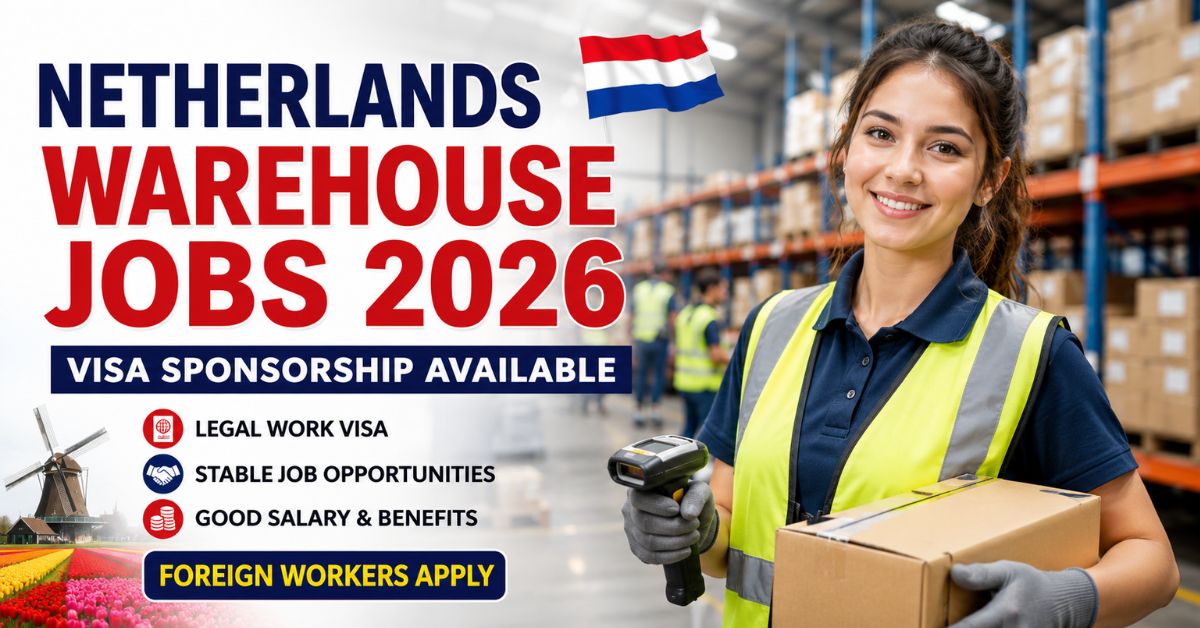
Netherlands Warehouse Worker Jobs with Visa Sponsorship 2026
Across the Netherlands, more warehouses need staff because shipping stuff online and moving goods between countries keeps rising. Come 2026, businesses there will likely bring in people from abroad to fill spots handling storage and deliveries, particularly near busy hubs like Rotterdam, Amsterdam, and along transport corridors. If you live outside Europe and want steady work on this side of the world, these positions that include help with work permits might be just what opens the door.
Warehouse Worker Jobs in the Netherlands Overview
Most people moving abroad find warehouse roles a straightforward entry into Europe’s job scene. Because of the Netherlands’ central spot in Europe and solid trade networks, demand keeps rising there. Think retail or online shopping, even medicine transport – all rely on storage centers to move goods. Factories need them too, just like companies that ship products across borders.
The Netherlands is the home of large logistics hubs linked to European ports and airports. Large companies with DC’s usually need extra hands to work during peak times, which opens up possibilities for foreign workers who want to go to DC’s and apply for visa sponsorship as warehouse workers.
Picking and packing products, loading shipments, scanning, sorting inventory, and preparing orders may be among the types of warehouse worker jobs. Other roles may involve organizing inventory and labeling packages. There are some jobs that involve standing for long periods, as well as being physically strong, and others that deal with technology systems and equipment manipulation.
Such employment for foreign workers may offer a monthly income, legal contracts, and a glimpse into European culture. While a majority of employers do not sponsor, some recruitment agencies and logistics companies do assist qualified foreign nationals in getting work authorization.
Why foreign workers are needed in the Netherlands
- In the logistics and warehouse sectors in the Netherlands, several economic and demographic factors are contributing to the absence of labour. One reason is the ongoing growth of online purchases throughout Europe. Large fulfillment centers are essential for e-commerce businesses to keep up with customer ordering and ensure timely delivery.
- Moreover, in physical demanding sectors, local labour may prefer to work in an office setting, thereby causing the Dutch labour market to experience shortages. Consequently, job opportunities for overseas hires are becoming more plentiful, and their wages are also higher.
- The importance of the Netherlands’ function as a trade gateway in Europe is another relevant aspect. Millions of goods are transported across the continent through ports, distribution centers and transportation networks on a yearly basis. This means there is an on-going need for warehouse staff to support the supply chain.
- Seasonal demand is also a factor. Increased hiring at warehouses can happen during periods of holiday shopping or when there’s a surge in product availability during periods when logistics activity is increased. The recruitment agencies can recruit temporary or long-term foreign workers to fill these gaps.
- This demand can even create opportunities for individuals from outside of Europe to find legible employment in the Netherlands through the programs offered by employers or through a labor recruitment partnership.
Types of Warehouse Jobs Available
There are a lot of various jobs and tasks involved in warehouse work in the Netherlands. There are several typical jobs available, such as:
Order Picker
Order picking involves picking up products from storage shelves, according to customer orders. Handheld scanners or digital systems are used to identify and prepare items for shipment by workers.
Packing Assistant
Packing assistants load items for shipping by packing them into boxes and sealing packages and affixing shipping labels.
Forklift Operator
A forklift is used to carry heavy items and pallets inside a warehouse. Some employers may have a forklift certificate or training requirement.
Inventory Controller
Inventory controllers keep track of stock levels and update warehouse systems to maintain a record of accurate inventory.
Loading and Unloading Worker
These workers help to unload and load cargo, containers, or packages from trucks to shelving and similar structures in a warehouse.
E-commerce Warehouse Worker
E-commerce fulfil centres need its staff to be efficient at processing online orders. They are usually equipped with state-of-the-art automation and barcode scanners.
Main Duties and Responsibilities
The primary duties and responsibilities of a job.The main tasks or duties required by a job.
Warehouse workers carry out vital duties that support businesses to handle inventory and provide products efficiently. Duties can include but are not limited to:
Involve in the task of selecting items from shelves in a warehouse.Assist in selecting items from a warehouse shelf
- Careful packing of customer orders.
- Assigning labels, tracking and organizing shipments
- Bar code systems and warehouses software.
- Loading and unloading delivery trucks
- Cleaning and keeping work areas safe
- Checking inventory accuracy
- Reporting damaged goods or missing stock
- Following company safety regulations
Repetitive movement, lifting packages or standing for long periods may be required for some jobs. Workplace safety training is usually given by the employer prior to employees taking on full duties.
Salary Expectations in 2026
In the Netherlands, the salary of warehousers relies on a number of factors such as experience, shifts, overtime availability, size of the employer, and location of the job.
For warehouse workers, earnings in 2026 will range from approximately €1,900 to €2,800 monthly gross wages, before tax. Overtime, weekend work and night shifts can boost overall income.
In addition, some employers may offer:
- Paid overtime
- Holiday allowances
- Transportation support
- Accommodation assistance
- Health insurance contributions
Employment contracts should be carefully reviewed by workers to clarify deductions, tax and benefits.
Visa Sponsorship Explained
- A job provider steps in when someone from another country needs permission to work legally in the Netherlands. Often, that business handles paperwork for approval or teams up with official hiring groups allowed to bring in overseas talent.
- Depending on where the worker comes from, their job agreement might need extra paperwork. Starting work often means sorting out legal stay documents ahead of time if they are not from an EU country.
- Most employers willing to sponsor want people they can count on. Fitness matters a lot – jobs often demand physical effort. Flexibility with hours is usually expected. Not every role requires it, yet speaking some English helps at many workplaces.
- Check first – does the company actually exist on official records? Watch out for red flags like demands for money before starting work. Offers that sound too good to be true often are. A legitimate position won’t ask you to pay your way in. Confirm hiring rights for outsiders through proper channels. High-paying roles with little effort promised tend to fall apart quickly.
Requirements for Foreign Applicants
If you are a foreign applicant, you are required to satisfy the following requirements:
The qualifications for warehouse positions requiring visa sponsorship also vary, but the majority of warehouse employers require applicants to fulfill the necessary requirements for employment.
Common Requirements Include:
- Valid passport
- High school education or equivalent
- Simple understandings of written English text
- The ability to perform warehouse work.
- Stamina for warehouse work.
- Clean background record
- Competence in working hours and overtime.·Knowledge of Shift and Overtime.
- Eagerness to move to the Netherlands
A few jobs might call for:
- Previous warehouse experience
- Forklift certification
- Basic computer skills
Understand how inventory is managed.Understanding of inventory systems.
There are numerous positions in the warehouse that do not require higher education, so there are more opportunities for international applicants.
Step-by-Step Application Process
Getting ready might start with checking what skills matter most. A clear plan often helps when looking for warehouse roles there. Success could come easier if each step gets attention. Research usually makes a difference down the road.
Prepare Your CV
Create a Professional CV Highlighting Key Skills Experience and Achievements
- Work experience
- Physical labor experience
- Language skills
- Teamwork abilities
- Certifications or training
Start off by laying out details neatly so they’re easy to follow. Toss in correct phone numbers, emails, or addresses – no guesswork allowed.
Find Real Employers
- Look for jobs through:
- Official company career pages
- Licensed recruitment agencies
- European job portals
- International hiring programs
Always verify employer legitimacy before applying.
Submit applications
Send your latest resume along with a brief note on why you’re drawn to warehouse roles in the Netherlands. Start fresh each time. Mix how you say things. Change rhythm. Break patterns. End differently every now and then.
Attend interviews
Interviews done through the internet let bosses check how well someone talks, if they’re free when needed, also whether they seem ready to jump into tasks. Still, it’s less about scripts more about real reactions under normal pressure.
Get Job Offer
Should things go your way, a job offer might come through, spelling out pay, work times, housing, plus visa support.
Visa and Work Permit Steps
Someone hiring might help sort out needed visa papers along with work permits. Sometimes a job placement group steps in to handle paperwork that immigration asks for.
Travel and start work
Once given the go-ahead, staff head to the Netherlands where they finish registration steps. Arriving after clearance, newcomers settle into roles through local orientation tasks.
Top Places with Warehouse Work
Finding work in warehouses pays off well in parts of the Netherlands – smart planning behind transport systems makes it happen. A few urban zones pull ahead simply because roads, ports, and rails connect so tightly there.
Rotterdam
Rising along the Rhine’s edge, Rotterdam handles vast flows of cargo across continents. Its docks pulse with movement, linking inland routes to global shipping lanes.
Amsterdam
Across Amsterdam, e-commerce thrives through sprawling distribution links tied to global markets.
Eindhoven
Eindhoven supports technology and industrial supply chains with warehouse employment opportunities.
Utrecht
Finding its place right in the middle of the country, Utrecht hosts several busy transport hubs. Though small on the map, it connects far-reaching routes through steady movement of goods.
Tilburg
Tilburg has become an important warehouse and distribution center for international companies.
Working in Dutch Warehouses
Working in the Netherlands can provide several professional and personal advantages for foreign workers.
Stable Income
Most warehouse roles pay a steady amount each month. Workers might earn extra by staying longer shifts now and then.
International Work Experience
Out there in Europe, time spent on the job could open doors later – especially if paths lead toward moving goods or managing supplies. A stint abroad might just tilt chances in someone’s favor down the line, when roles start appearing in those fields. Could be the edge that makes a difference, simply by having been part of how things run across borders.
Modern Work Environment
Fresh off the mark, some storage spots in Holland run on smart tools instead of old methods. A step beyond clutter, tidy tracking shapes how goods live inside these spaces.
Employee Protections
Most of the time, work rules in the Netherlands care about safe conditions along with fair treatment for workers.
Multicultural Workforce
Out of necessity, storage facilities hire people across various countries, so teams mix many backgrounds. Though location ties them together, their origins differ widely.
Work Environment and Working Hours
Some days start early, others stretch past dark, depending on the schedule. Not every warehouse feels the same, yet most follow a clear routine built around shift times.
Employees may work:
- 8–10 hour shifts
- Weekend rotations
- Peak-season overtime
Besides gloves, workers might get safety shoes – sometimes even clothes that shine under light – all supplied by the company they work for.
Out here, speed meets precision – each task moves quick but must stay correct. Not showing up on time? That weighs heavy when others rely on you daily.
Tips to Boost Your Job Application Success
Getting a sponsored job might mean facing lots of other people who want it too. Staying ahead often comes down to building stronger skills and experience.
Improve English Skills
Basic communication ability can help during interviews and workplace training.
Gain Warehouse Experience
Even short-term warehouse or logistics experience can strengthen applications.
Obtain Certifications
Besides driving a forklift, having safety training can open doors at warehouses. Some employers look for proof you know the rules before handing over keys. A certificate might just be what sets one applicant apart from another.
Apply Early
Well ahead of time, most hiring pushes for temporary roles get rolling. Long before workers show up, companies are already setting things in motion.
Research Employers Carefully
Start by looking at firms known for doing right by their people. A clear hiring path often shows they respect candidates. Reputation matters when choices are tough. Those who share how decisions happen tend to earn trust. Pick workplaces that act openly from step one.
Common mistakes to avoid
Many applicants make avoidable mistakes during international job searches.
Applying to Unverified Agencies
Check first – does the hiring company actually have legal registration? A quick verification step could prevent bigger issues later on.
Ignoring Contract Details
Check what you earn, where you live while working, extra hours pay, also how money gets taken out. Always look closely at those details before agreeing.
Paying Big Upfront Costs
That often signals a red flag. Real jobs tend to cover their own paperwork costs.
Using Weak CVs
That often hides what you’ve actually done. Hiring managers might skip right past it.
Overlooking Living Costs
Money goes further in certain places, yet Dutch costs sit on the heavier side. Because of that, watching how funds move matters quite a bit.
Accommodation and Transportation
Living close to warehouses often comes with support from hiring companies. International staff usually share homes. Not every worker gets this help, yet many do. Arrangements pop up through recruiters too.
Most people in the Netherlands get around easily thanks to well-organized transit systems. Commuters usually move between places using bicycles, trains, buses, or trams
- Bicycle
- Public buses
- Trains
- Employer shuttle services
Bikes rule the streets since urban layouts across Holland favor pedaling. City plans made long ago now help folks get around on two wheels easily.
Career Growth Opportunities
Starting out stacking shelves might lead someone down a path of steady growth. For those keen to keep moving forward, warehouse roles often open doors over time. Progress comes easier when effort stays consistent. Growth shows up where persistence goes deep.
Employees may progress into positions such as:
- Team leader
- Inventory supervisor
- Logistics coordinator
- Forklift specialist
- Warehouse manager
Workers might pick up new abilities through company-led sessions where know-how grows alongside guidance talents. Training inside certain firms builds both sharp skills and the ability to lead over time.
Working in the Netherlands could open doors elsewhere across Europe. What you learn there might just matter down the road in another country. Time spent on Dutch soil often counts later under different flags. Skills picked up near canals and windmills sometimes fit neatly into other markets. Lessons learned in one corner of the continent tend to travel well.
Also Read:how-to-apply-for-factory-jobs-in-romania-for-foreign-workers/
FAQs
-
Foreigners wonder if they can get warehouse work in the Netherlands?
True, certain companies in the Netherlands bring in overseas staff for storage jobs – some even assist with work permits. A few recruitment firms support this path too, opening doors under specific conditions.
-
Do I Need Dutch Language Skills?
Starting out, plenty of warehouse jobs need just simple English. Yet knowing Dutch could open more doors later on.
-
Are warehouse jobs physically demanding?
Folks working in warehouses often spend their days on their feet, moving around constantly. Lifting items shows up a lot in those jobs, part of the daily routine. Shifts tend to keep bodies active, rarely allowing long breaks.
-
Must you have done this before?
Getting started somewhere often means no past work is needed. Yet having handled a warehouse before might just tip the odds during hiring.
-
Can warehouse jobs lead to permanent employment?
Later on, a short-term role might shift into something permanent – how well someone does matters, along with what the business requires at that time.
Final Thoughts
Out there beyond the borders, positions for warehouse staff in the Netherlands could open doors for those wanting hands-on roles abroad by 2026. Growth doesn’t slow down – instead, it pulls harder on supply chains, which keeps companies searching for steady workers. Busy ports, busy warehouses; places like Rotterdam or Eindhoven stay active through seasons. Visa help often comes attached when local hiring falls short. Foreign applicants might find footing where machines haven’t replaced human touch. Shifts start early, yes – but that rhythm suits many chasing new ground. Experience earned here tends to travel well later.
Some roles demand physical effort, work outside regular hours. Yet steady pay comes through, workplaces stay up to date. People meet coworkers from many backgrounds. Growth might happen over time. Getting hired usually takes planning ahead. Expectations need to match reality. Applications must look professional. Dodgy offers tend to cause problems.
Start by sharpening how you express ideas, so messages land clearly. A solid CV often opens doors others miss. Dig into real companies first – know who actually hires. Visa rules? Best to grasp them early, not later. Thoughtful steps today shape what comes next. Warehouse roles there might quietly lead somewhere bigger down the line.