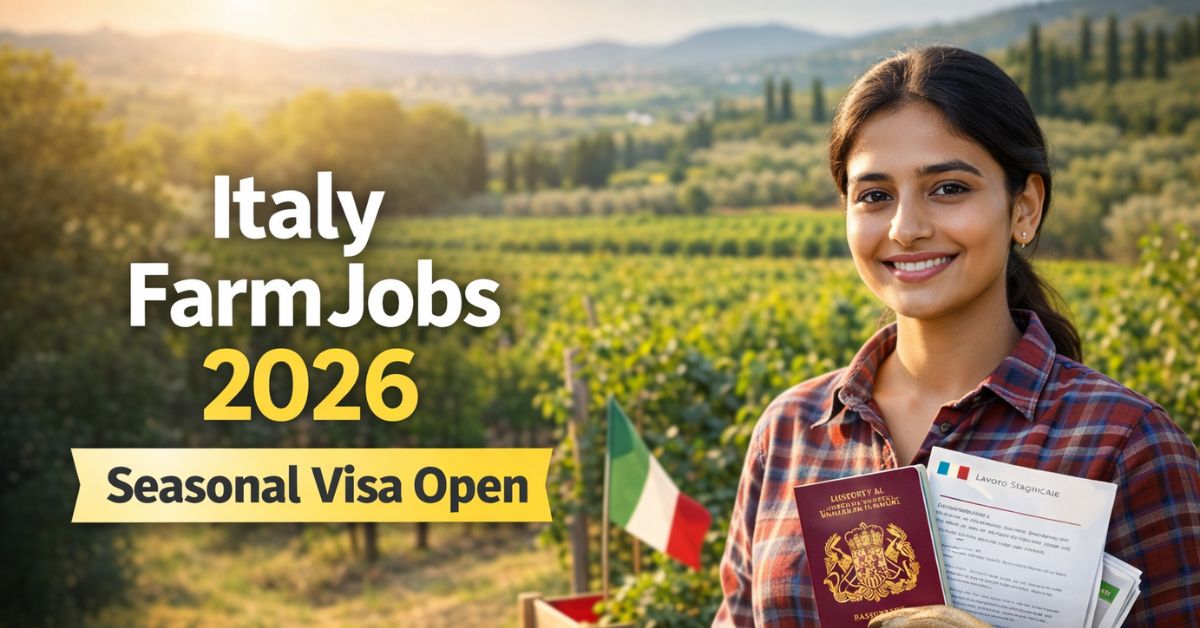
Italy Farm Jobs 2026 – Seasonal Visa & Easy Apply Guide
Locating the good employment in the foreign farms might be tricky, particularly when you are not certain about the visa procedure, legal procedures and the employment prospects. Numerous job applicants are keen to work in Europe, yet the misunderstandings of seasonal visas and eligibility tend to bring confusion. Italy is however, among the most convenient places where one can get agricultural employment as it issues seasonal work visas to foreign workers annually.
This seasonal work Italy Farm Worker Jobs 2026 is a comprehensive guide created to provide easily understandable, practical, and reliable information. You will understand the operational mechanism of the seasonal visa program, nature of farm work opportunities, wages, and steps to take to apply without becoming scams. This article will assist you to know the actual process and how to get ready to get opportunities in the agricultural sector in Italy whether you are a beginner or have some basic farming experience.
Italy Farm Worker Jobs 2026 Overview
- Italy is an agricultural country with a fruit and vegetable production, olive, grape and other crop production, which demand large numbers of seasonal workers. Each year the Italian government issues quotas within its seasonal work program (often referred to as the “Decreto Flussi”) enabling employers to legally employ foreigners on short-term agricultural jobs.
- By 2026, the demand of farm workers will be high because there will be continuous labour shortages in rural regions. These are the jobs that can be specifically offered to international candidates as they do not demand high qualifications or professional degrees. Employers primarily seek physical fit personalities willing to work in the outdoor and obey orders.
- The number of months spent in seasonal farm work normally varies between 3 to 9 months, based on the crop cycle. These positions are short-lasting, but they can be a good international experience and can lead to other opportunities in Europe in the future.
Key Highlights
- ITaly 2026 Seasonal farm jobs in Italy.
- Seasonal work permit program (Decreto Flussi) authorized by the government.
- Opportunities in international workers of basic skills.
- Most roles do not need any higher learning.
- Attractive salaries and the option of overtime.
- Laws of employment with worker protection.
Farm Jobs available in Italy
Fruit Picking Jobs
One of the most widespread seasonal jobs is picking fruits. The workers harvest fruits like apples, oranges, grapes and strawberries. This is a physically demanding job that demands working many hours at peak seasons.
Vegetable Farming
Vegetable farms employ people to plant and water crops, harvest and package products. These jobs can be found all year round depending on the type of crop.
Vineyard Work
Italy is known as the wine-producing country and having vineyard employment is popular. Employees help to pick grapes, trim vines and take care of the fields.
Olive Harvesting
Olive farms also need seasonal workers who are able to pick up olives in the harvest seasons. It is typically a short-term, though intensive work.
Greenhouse Work
Other farms have greenhouses in which employees work in a controlled environment, which involves planting, maintenance of plants, and packaging.
Wages and Hours of Work
Salaries of farm workers in Italy depend on the region, the employer and the kind of work. On average:
- Hourly wage: €7–€10
- Monthly earnings: €900–€1,500
There can be overtime compensation.
The average hours worked are 6 to 8 hours/day, with extra hours worked during peak harvesting seasons. Other benefits that the workers might get include accommodation or meals depending on the employer.
It is also crucial to note that seasonal employment may be physically rigorous and salaries are based on the standards of entry-level labor in the agricultural sphere.
Italy Seasonal Work Visa Explanation
The Italy Seasonal Work Visa is a visa that enables non-EU citizens to work in the country temporarily. This visa is granted on government quotas and must have a good job offer by an Italian employer.
The main facts of the Seasonal Visa
- Lasts up to 9 months.
- Associated with a certain employer.
- Needs a work contract prior to application.
- Can be renewed under certain conditions
The employer needs to seek permission before the worker can make an application of a visa. Upon approval, the worker is able to continue with the visa procedure with the Italian embassy of his or her home country.
Farm Worker Jobs in Italy Requirements
The applicants will usually require:
Basic Requirements
- Valid passport
- Job offer from an Italian employer
- Disposition to do physical work.
- Basic understanding of instructions
Additional Requirements
- Work visa approval
- Medical fitness
- Clean background record
The needs can be slightly different according to the employer and job position.
Step-by-Step Application Process
Step 1: Find a Job Offer
Find farm jobs via official sites, recruitment agencies that are authorized, or employer networks. Make sure that the job opportunity is authentic.
Step 2: Employer requests Work Authorization
Based on the seasonal quota system, the employer files a request to employ a foreign worker.
Step 3: Receive Authorization
After this, the employer forwards to you the authorization document you need to apply to the visa.
Step 4: Apply for Seasonal Visa
Present your visa application at the Italian embassy or consulate in your country along with all the necessary documents.
Step 5: Wait until Approved
Processing can take longer, and should be applied early when the quota is open.
Step 6: Go to Italy
Once your visa has been approved, you can travel to Italy, and start working based on your contract.
The advantages of Seasonal Farm Work in Italy
Being a farm worker in Italy is beneficial in a number of ways:
- Legal work opportunity in Europe
- Entry-level positions available to novices.
- Potential to make and save money.
- International work culture.
- Potential repeat customer / subsequent seasons.
- Experience in agriculture and farming
Detailed Work Process of Farm Jobs in Italy
- Each morning begins much the same way – hands busy, sun rising. Depending on where you are and what grows there, your day might mean pruning vines or gathering olives. Tasks repeat often yet matter deeply to how well things grow. Being ready means knowing it won’t feel new each time, just necessary. The rhythm changes with weather, harvests, local ways.
- Before sunrise is when most labor begins, mainly in warmer months to escape midday temperatures. Field prep might come first, then moving on to gathering crops, organizing them, later boxing up what’s ready. Ripe pieces get chosen by hand, those handling fruit take care not to bruise the skin while filling bins. Planting new rows happens alongside watering systems checks and pulling unwanted plants so vegetables grow without competition.
- Busy times bring heavier loads, so staff often need to hit daily goals. Still, companies must stick to legal rules about time off and shift lengths. When people work well together, jobs get done faster – timing matters when teamwork’s involved.
- Some jobs might tire your body, yet they often come with a clear daily pattern – something people adapt to within just a few shifts. Starting out, most receive hands-on instruction so they learn tasks and stay safe on the job.
Seasonal Farm Labor Needs Across Italian Regions
Across Italy, farming needs shift from place to place. When you grasp regional differences, applying for roles gets sharper. Each area focuses on certain plants – so work comes and goes with growing cycles.
Northern Italy
Fruit picking jobs turn up across Lombardy, where fields stretch wide under open skies. Moving east, Veneto holds steady with dairies that run year-round. Instead of crops alone, some farms grow vegetables inside glass halls. Emilia-Romagna blends both traditions, mixing old methods with new tools. People there work early, often before light touches the land.
Central Italy
Out in Tuscany, work shows up on grape fields and olive groves. When picking time comes around, people head out to help, sticking close to old ways of growing crops.
Southern Italy
Out in the south, places like Puglia pull in lots of temporary labor when it’s time to pick crops. Harvest seasons there lean heavily on hands for gathering ripe tomatoes under hot sun. Calabria shows up strong with citrus, its groves needing extra help come picking time. Workers move through these zones each year, drawn by olive harvests that stretch across rolling hills. Sicily joins the pattern too, where fields of produce rely on shifting crews month after month.
Not every place feels the same – work setups differ, weather shifts. Picking a spot means matching it to what you can handle, both body and mind. Where you go depends on how well you fit in.
Where People Stay and Live
Out in the countryside, where most Italian farms sit, places to stay often come included with the job. Housing shows up more regularly during harvest months, cutting down what workers need to spend each week. When beds are offered by bosses, money stretches much further than it might otherwise.
Employer-Provided Housing
Living spaces on certain farms come as shared units, sometimes dorms or grouped flats. Though plain, they work just fine – kitchens and toilets nearby. Each setup keeps things barebones yet usable.
Independent Accommodation
When there’s no place to stay offered, people might have to find somewhere themselves. Sometimes they split rent with coworkers just to keep things affordable.
Living Conditions
Some employers provide better housing than others, it really depends where you are. Before saying yes to work, make sure you know what kind of place you will stay in so nothing comes as a surprise later.
Food and Daily Costs
When you handle everyday spending carefully, saving money becomes easier with short-term jobs.
Food Costs
Meals come included at certain workplaces, though some simply supply cooking spaces instead. Rural grocery prices tend to stay lower than those found in large urban centers.
Transportation
Beyond city edges, farms usually sit where getting around isn’t always easy. When rides aren’t offered by a boss, employees might need to figure out their way there themselves.
Saving Potential
When work follows the seasons, housing usually comes included. Costs stay low because everything is set up simply. Savings start adding up when spending gets watched closely. A smart eye on daily purchases makes the difference. Money stays put instead of slipping away. Careful choices stretch each paycheck further. Living tight leaves room to grow savings slowly.
Work Culture and Environment in Italy
Finding your way in a foreign job scene often starts with small daily choices. In Italian farming life, rhythms grow from habit passed through generations, tied closely to shared effort among workers.
Team-Based Work
Most farm jobs need people working together. Teams move through chores, helping one another just to get things done. Getting along with those nearby makes days go smoother.
Respect for Work Hours
Most days, work schedules in Italy stick to clear rules about time on the job and breaks. Following the law matters a lot if you hire people there, since it shapes how teams get treated across companies.
Communication Style
Out here, folks might not speak much English beyond city limits. Still, getting your point across tends to work just fine most times. Knowing even small bits of Italian makes things go smoother. People who hire you will notice – and that effort won’t go unnoticed.
Legal Rights and Worker Protection
Workers from abroad in Italy get safeguarded by rules meant to keep jobs fair and workplaces secure.
Employment Rights
Getting paid what was promised matters most. A break during the day helps people stay focused. Safety on the job means fewer accidents happen. What someone must do at work ought to be written down plainly. Pay rates need to show up in the paperwork too.
Protection Against Exploitation
Start by choosing companies that hire through proper channels. In Italy, watchdog groups keep an eye on how workers are treated to stop abuse before it spreads.
Reporting Issues
When mistreatment happens on the job, speaking up to regional officials or worker groups is an option. Workers can turn to support networks nearby if conditions feel unjust at work.
Long Term Chances Following Seasonal Jobs
Just because harvest work ends doesn’t mean the door closes behind you. Doing a solid job might open something new down the road. Good effort sticks in people’s minds, even when the season fades. A short-term role could quietly turn into another chance later. Performance often writes its own next chapter.
Back Again When Needed
Back at the job site, familiar faces often get first pick. When you leave a solid impression, return offers tend to follow.
Move to Different Jobs
Farming know-how might lead someone toward work in moving goods, handling food products, or similar fields. Sometimes skills grow beyond the field where they started.
Skill Development
Working different jobs through the year builds abilities like sticking to a schedule, cooperating with others, even staying focused when it gets busy. These fit well no matter where work life leads later on.
Ways to Improve Your Odds of Getting Chosen
Apply Early
Most spots go fast when they open each year. Getting your application in ahead of time boosts the odds it will be picked.
Choose Reliable Sources
Start only where confirmation is clear – trust nothing else. Scams wait at every unmarked door.
Stay Physically Prepared
Farm tasks demand endurance, which means strength matters a lot. Getting through each day takes energy that builds on consistent physical readiness.
Keep Documents Ready
Start gathering your passport, pictures, along with any needed papers early so things go smoothly later on.
Be Honest in Applications
Wrong details might slow things down when applying for a visa. Getting it right helps everything move smoothly behind the cenes.
Common Mistakes to Avoid
- Applying through unverified agents
- Throwing cash at scams that promise work which does not exist
- Submitting incomplete applications
- Missing visa deadlines
- Ignoring contract details
Watch what you do. Knowing things ahead of time keeps problems away. That simple mix stops most mistakes before they start.
Also Read: UK Warehouse Jobs 2026 – Visa Sponsorship & Apply Guide
FAQs
-
Is it possible to apply without any farming experience?
Yes, a lot of jobs in the farms are entry-level and do not demand previous experience.
-
What is the maximum length of stay in Italy with a seasonal visa?
Depending on your contract you can continue to stay up to 9 months.
-
Is accommodation provided?
Accommodation is offered by some employers, depending on the job.
-
May I prolong my visit?
Depending on the visa regulations and employer requirements, extensions can be offered.
-
Do we need to speak Italian?
General knowledge comes in handy but is not essential in all cases.
Final Thoughts
- Seasonal visa Italy farm worker jobs in 2026 do not only concern temporary employment, but it is also a chance to have an international exposure, get practical skills and have the experience in a foreign cultural setting. Although the job might be physically challenging and demanding, it does provide a well-organized and legally approved avenue to make money in a foreign country.
- These positions are a stepping stone to wider career prospects in Europe to many applicants. Preparation, knowledge of the process and realistic expectations are the key to success. In order to maximize this experience, the applicants can concentrate on the true job opportunities, keep up with visa requirements and get used to working conditions.
- Arguing the right attitude and planning to this opportunity can enable you to not only find employment but also a base to future development in international employment.